Your Clique, your closet—on the web and in the App Store.
The Closet Clique is a student-focused fashion marketplace for renting and reselling outfits inside verified school networks—each network is a private “Clique” where members can list from their own closets, earn money, and browse looks from friends (and friends of friends). The brand launched in Dallas with select high schools and aims to grow into college campuses nationwide.
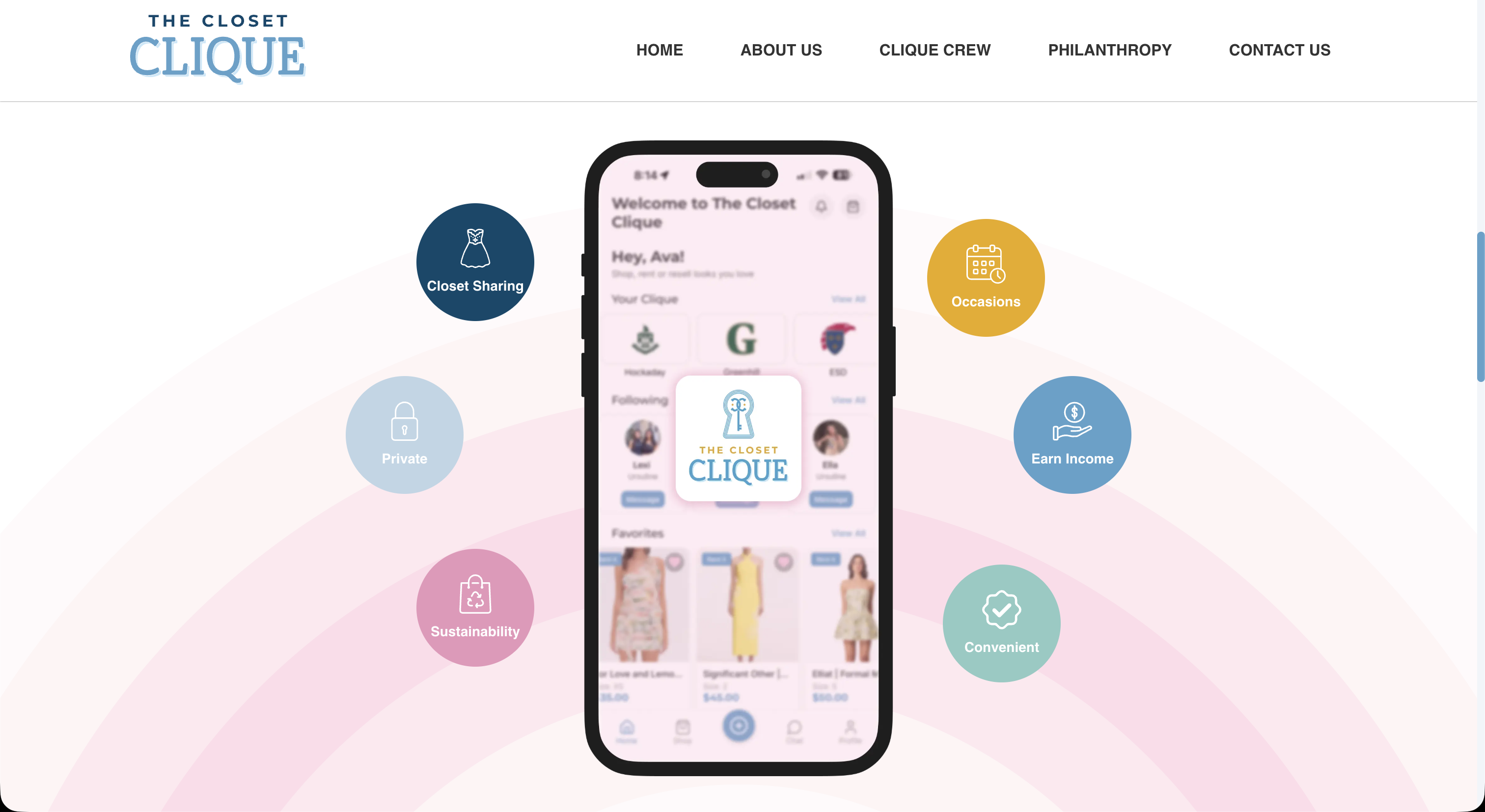
The cover image below is the marketing website. Further down, the side-by-side pair are both from the iOS app—the surface where verification, listings, and checkout live.
This write-up covers how the public site introduces the product, drives waitlist and App Store interest, and carries the trust and compliance story schools and parents expect, alongside the mobile product those visitors install.
View live site → · App Store →
Problem
Campus-adjacent marketplaces walk a narrow line:
- Students want fun, social, outfit-first discovery—not a generic resale grid.
- Parents and schools care about safety, verification, and clarity about who is in the network.
- The business needs App Store installs and waitlist momentum without over-promising what the website alone can do.
- Legal and payments messaging must be accurate: transactions run in the app (e.g. Stripe and Apple Pay), not implied as fully on the marketing domain.
The site has to feel aspirational (formals, game day, weekends) while staying explicit about verification, independence from institutions, and where money moves.
Goals
- Present a clear product narrative: shared closet, occasions, earning income, local handoffs (no shipping complexity on the message), sustainability, and privacy within a Clique.
- Support launch sequencing: Dallas-first story, “now live on the App Store” positioning, and room for new Cliques and features over time.
- Drive high-intent actions: join the waitlist, download on the App Store, and follow on Instagram for community proof.
- Reinforce trust: registered business (DBA of The Clique Collective LLC), support contacts, and disclaimers that schools are listed for verification only—not endorsement.
What shipped (marketing site)
Story-led homepage
The homepage is structured to answer “what is this?” and “why should I care?” quickly:
- Hero with the brand line your clique, your closet and Join the waitlist.
- Value pillars—closet sharing, occasions, earning income, convenience, sustainability, and exclusive verified-students positioning.
- App Store section: now live in Dallas, feature bullets (rent / resell / buy, exclusive access, verified school network), and a Download on the App Store path.
- Instagram block to connect community and UGC with ongoing campaigns.
Navigation and discovery
Primary IA mirrors how prospects explore a lifestyle brand: Home, About Us, Clique Crew, Philanthropy, Contact Us—so editorial and mission content sit alongside conversion.
Trust, legal, and operations
Footer and policy links surface Fulfillment, Privacy, and Terms, plus hello@ and support@ inboxes—appropriate for a product that blends community with commerce.
Copy reflects that all transactions process securely through the app using Stripe and Apple Pay, and that The Closet Clique is not affiliated with or endorsed by listed schools—reducing institutional risk while keeping verification honest.
Ecosystem: web vs. app
- The website is the brand and acquisition layer: story, social proof, waitlist, and App Store CTAs.
- The iOS app is where network verification, listings, and payments come together—exactly what parents and students need to hear when evaluating a student marketplace.
Two screens from the Closet Clique iPhone app:
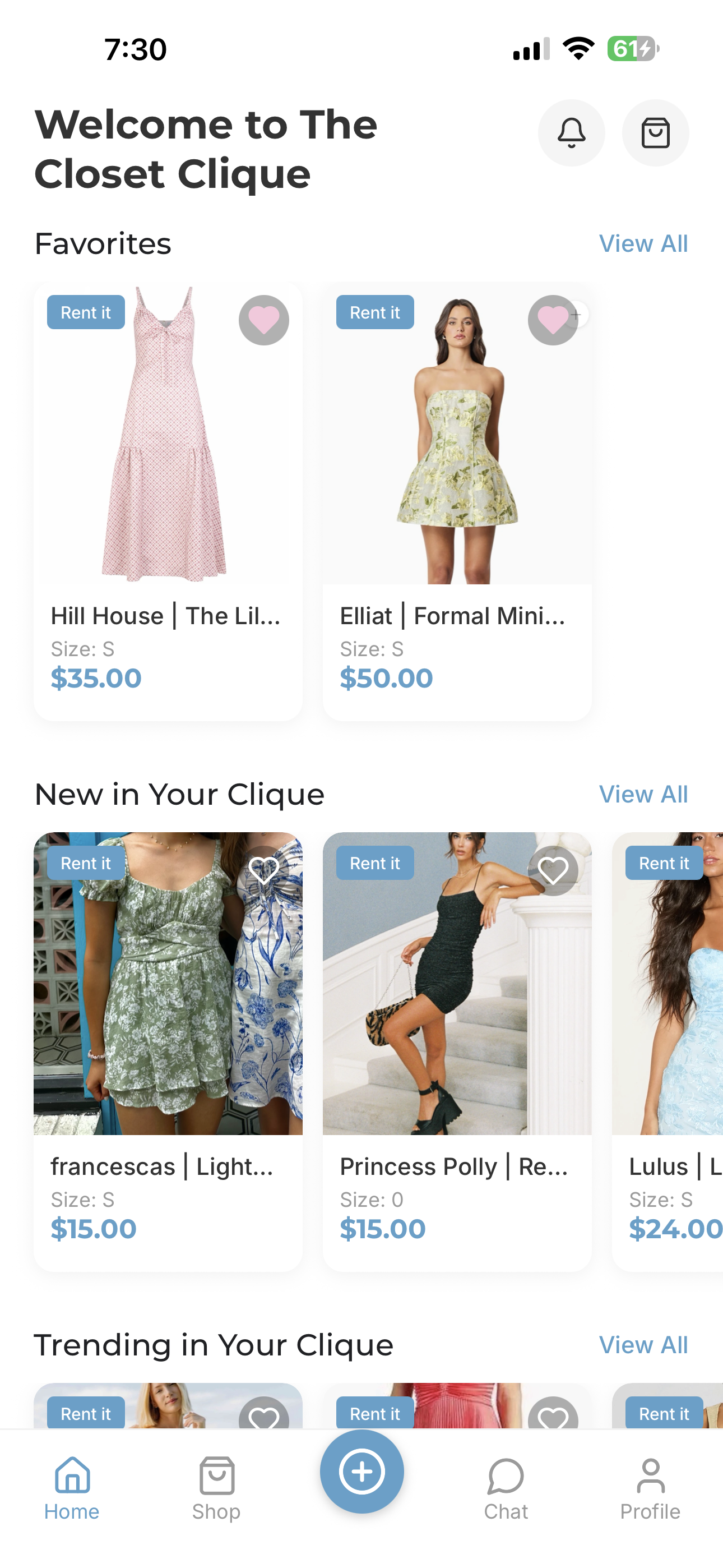
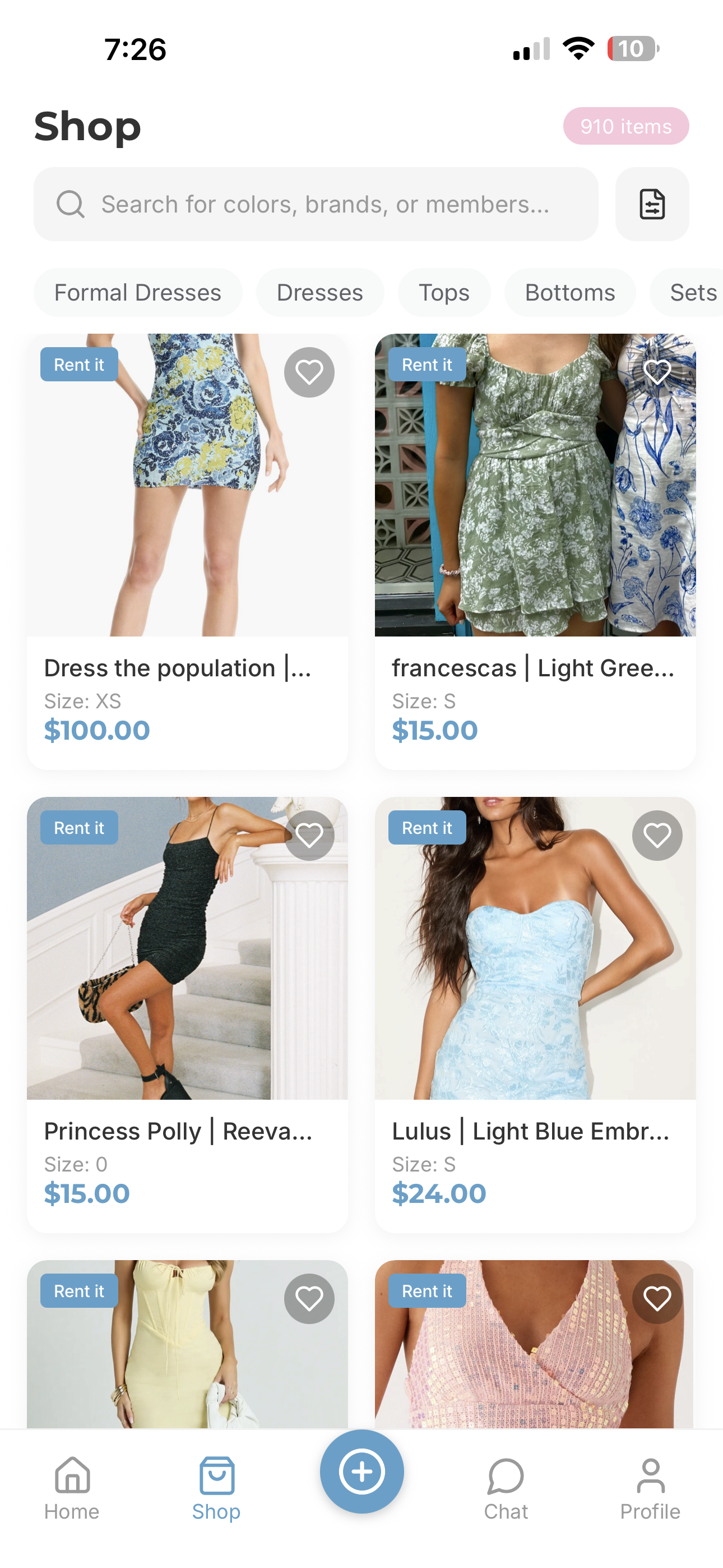
That separation keeps marketing fast and flexible while the app retains transactional and policy complexity where it belongs.
Tech stack
| Layer | Choices |
|---|---|
| Marketing site | Next.js, React, TypeScript, Tailwind CSS |
| iOS app | React Native with Expo |
| Backend | Supabase (Postgres), Supabase Auth, Supabase Edge Functions for server-side payment and verification logic |
| Payments | Stripe Connect for peer-to-peer payments between verified students |
| Shared model | One Supabase project behind both surfaces — no data duplication across web and mobile |
Supabase Edge Functions are the pivot point: the iOS app calls them for anything that shouldn’t live in the client (Stripe Connect flows, verification checks, privileged queries), so the React Native bundle stays lean and the sensitive logic stays on the server.
Challenges
- Tone vs. compliance — The brand voice stays youthful and aspirational; disclosures stay visible so verification and independence claims remain defensible.
- Launch geography — Messaging must celebrate Dallas-first traction without implying nationwide coverage before networks exist.
- Conversion split — Waitlist, App Store, and Instagram compete for attention; layout and hierarchy need to guide first-time visitors without burying legal and support paths.
Outcomes
- 1,200 active users and 1,200+ App Store downloads since the iOS app launched in September 2025.
- 216 students on the waitlist through the marketing site, ready to activate as new school Cliques open.
- End-to-end product delivery: React Native iOS app, Next.js marketing site, and a shared Supabase + Stripe Connect backend — all shipped within a single launch window.
- Clear separation of concerns: fast marketing layer for brand and acquisition, app layer for verification, listings, and secure in-app checkout.
- Operational transparency: registered business entity, contact channels, and in-app payments called out in plain language — the trust posture schools and parents actually read.
Final takeaway
The Closet Clique website is a conversion-aware brand surface; the iOS app delivers the verified marketplace experience. Together they have to sell the dream (shared campus closet, occasions, sustainability) and the details (verification, independence from schools, secure in-app checkout)—the balance student products need to earn trust at launch.